Sentera
2022
Product Design, User Research
About FieldAgent
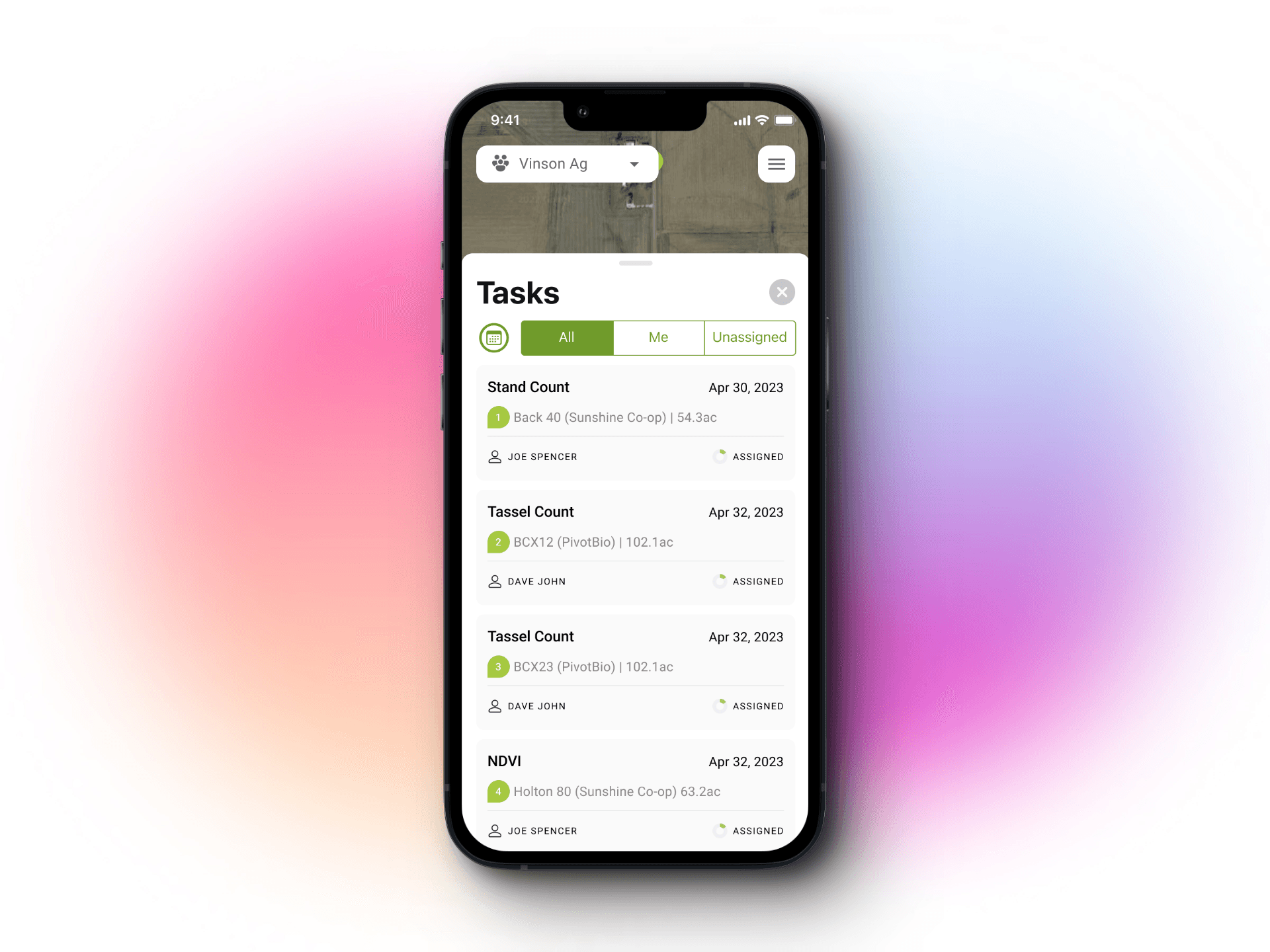
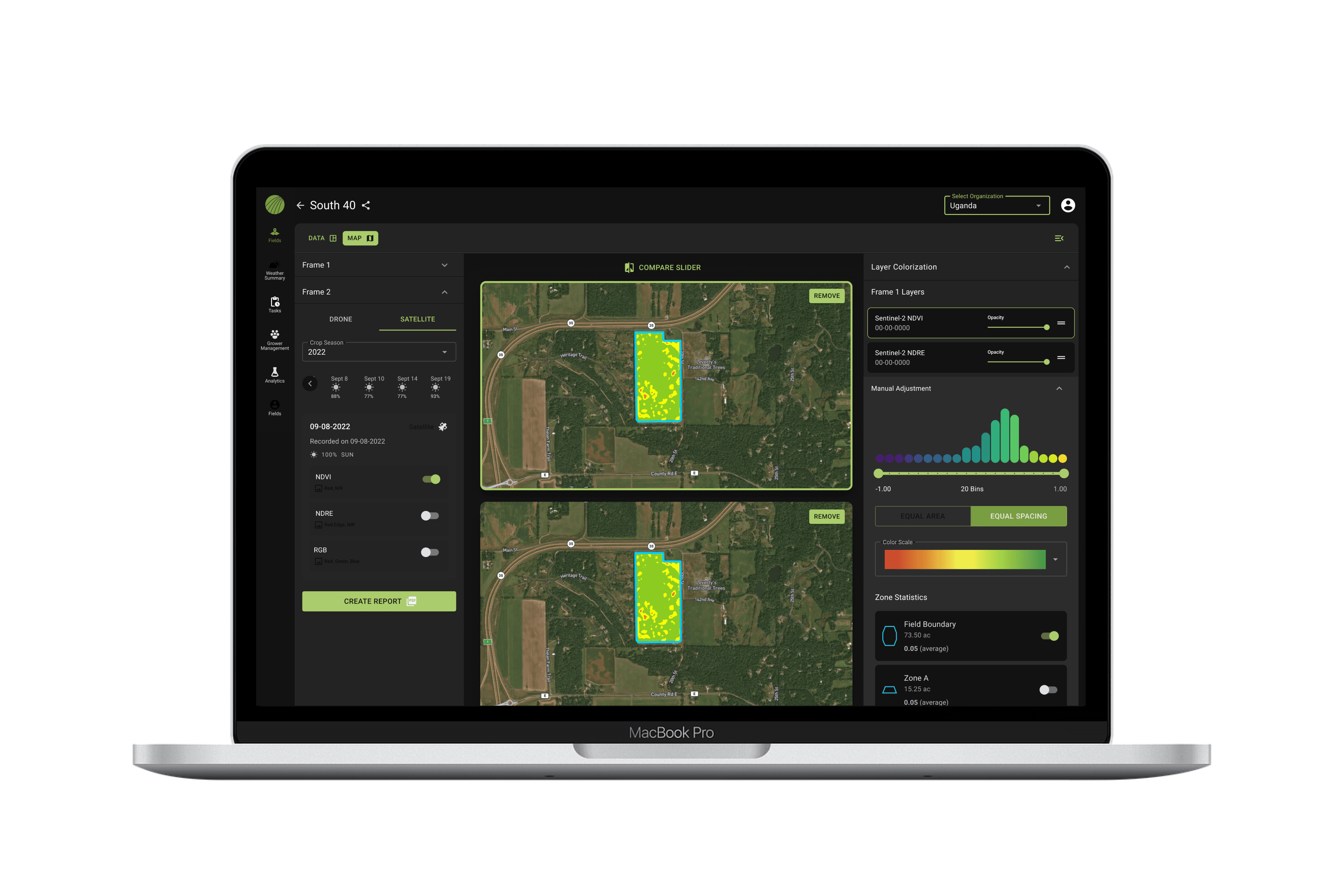
FieldAgent is a software platform for data visualization and analysis to get a clear picture of agricultural performance and outcomes.
FieldAgent has 3 clients: Web, iOS, and Windows Desktop
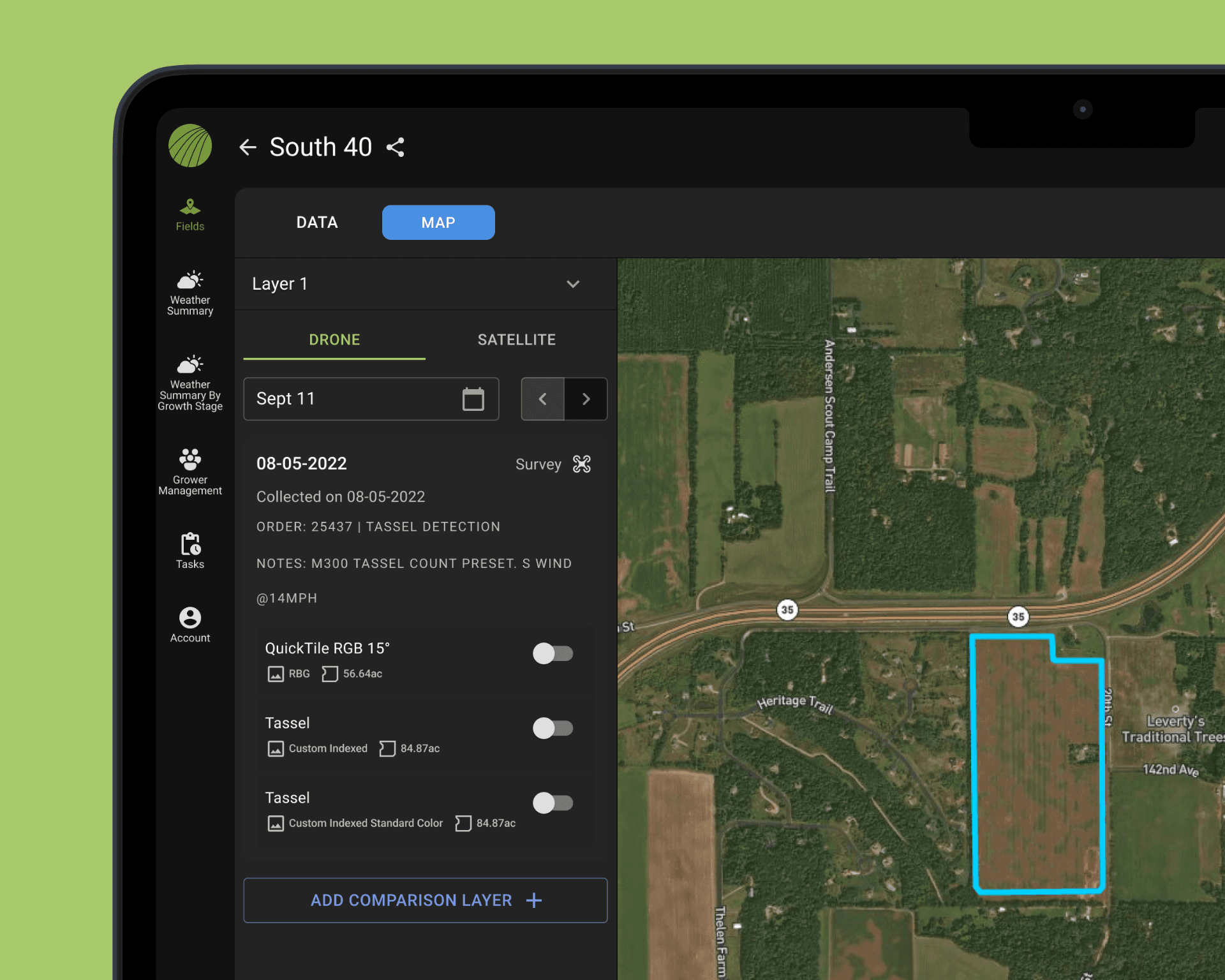
FieldAgent uses ML to analyze drone and satellite captured imagery
Customers can order specific analytic processes to be run on imagery.
The analytics are projected onto a map tile for geospatial analysis.
The Destination
Product-market fit is a crucial concept for any business, as it indicates whether a product is satisfying the needs of its target market. It is the sweet spot where a company's product offering aligns perfectly with the demands and expectations of its customers. Achieving product-market fit is essential for sustainable growth and long-term success.
When a product has achieved product-market fit, it means that customers are finding value in it and are willing to pay for it. This leads to increased sales, retention, and customer loyalty. It also makes it easier to attract new customers and expand into new markets.
The Road
Our product is designed for the wrong customer segment.
The Agronomist (think farm advisor) customer segment is shrinking, but the Product Validation and Verification (think testing seed varieties) market is growing. PVV customers spend more on analytics per license and the experience for PVV users is inefficient and doesn't enable downstream data analysis.
Research findings
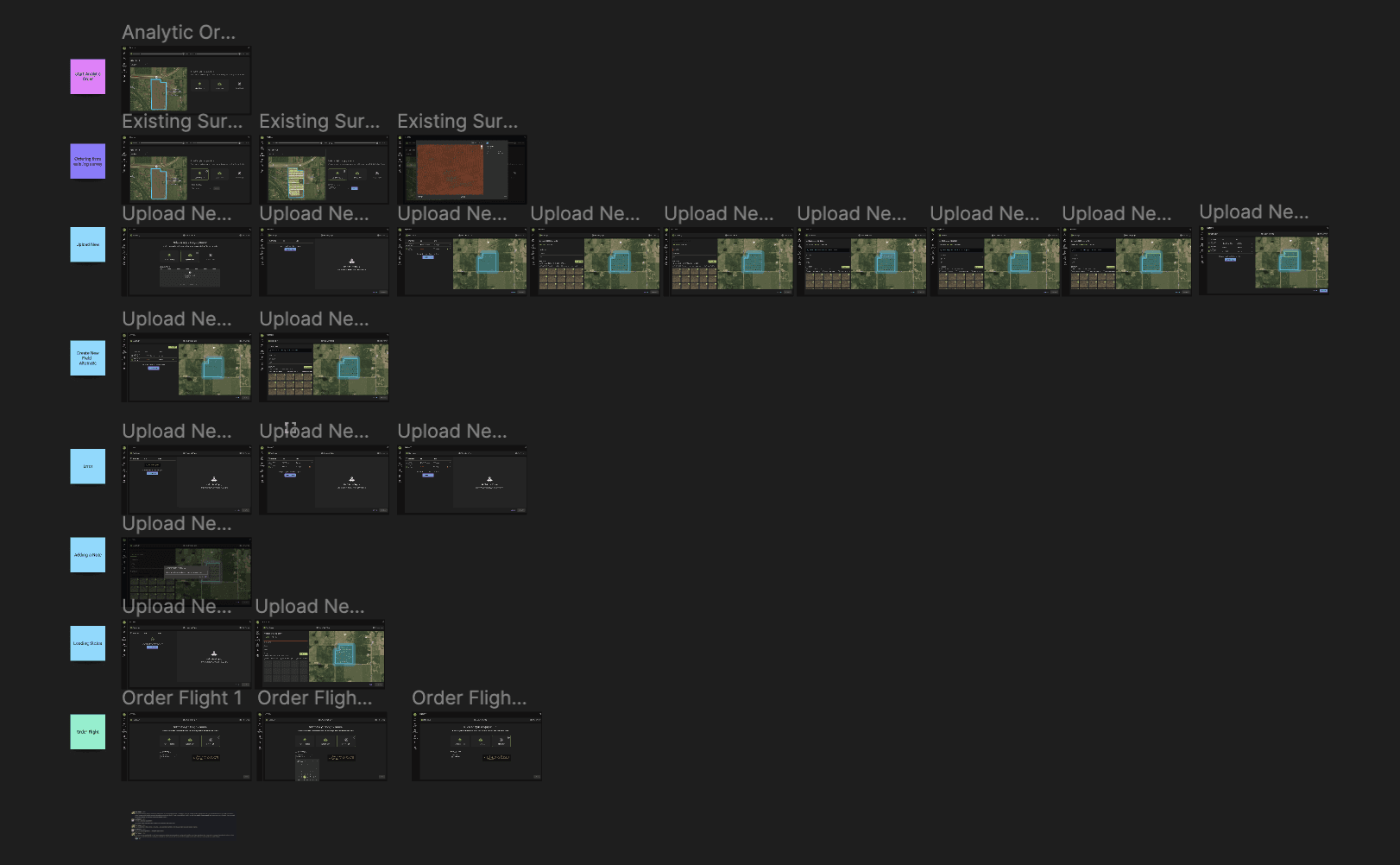
We sat down with 3 power users and had them audit our current experience. We wanted to understand what they were doing on our platform and what they needed to do on other platforms that weren't possible in FieldAgent.
Key findings:
Most want to fly and see the data. A stitched mosaic bridges the gap until the analytic is complete.
Large numbers of plots mean lots of repetitive manual actions. Downloading data is not efficient.
Uploading and managing plot layouts is not a good experience and our current process was frustrating.
They are still trying to find their KPI, haven't identified "The" product and they don't have “The” datapoint to find that.
The imagery doesn't tell you what the problem is, it tells you there is a problem.
User Personas
Large Company Agronomist with No Drones - They may have a geographic area of concentration and simply want the data outcome, not to worry about flights and map tiles. They may have a massive database of historical data, so their desire is to simply pipe numerical data out to their storage.
Large Company Agronomist with Drones - A fleet of drones and training pilots is no small investment, so they want a tool that is extremely easy to use and flexible in the field. They also have so much acreage that map based data cannot provide the insights at scale.
Wireframing the Concept
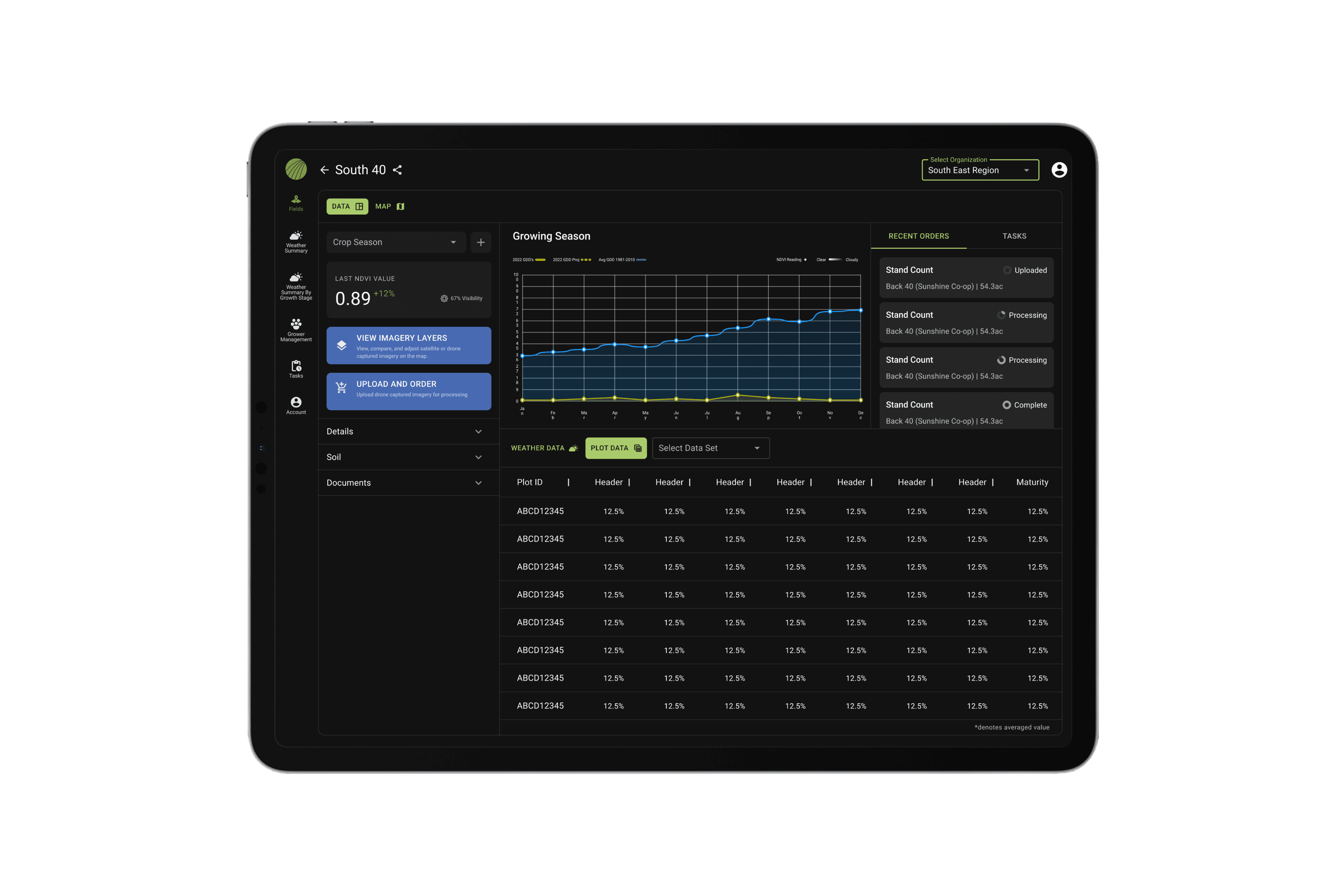
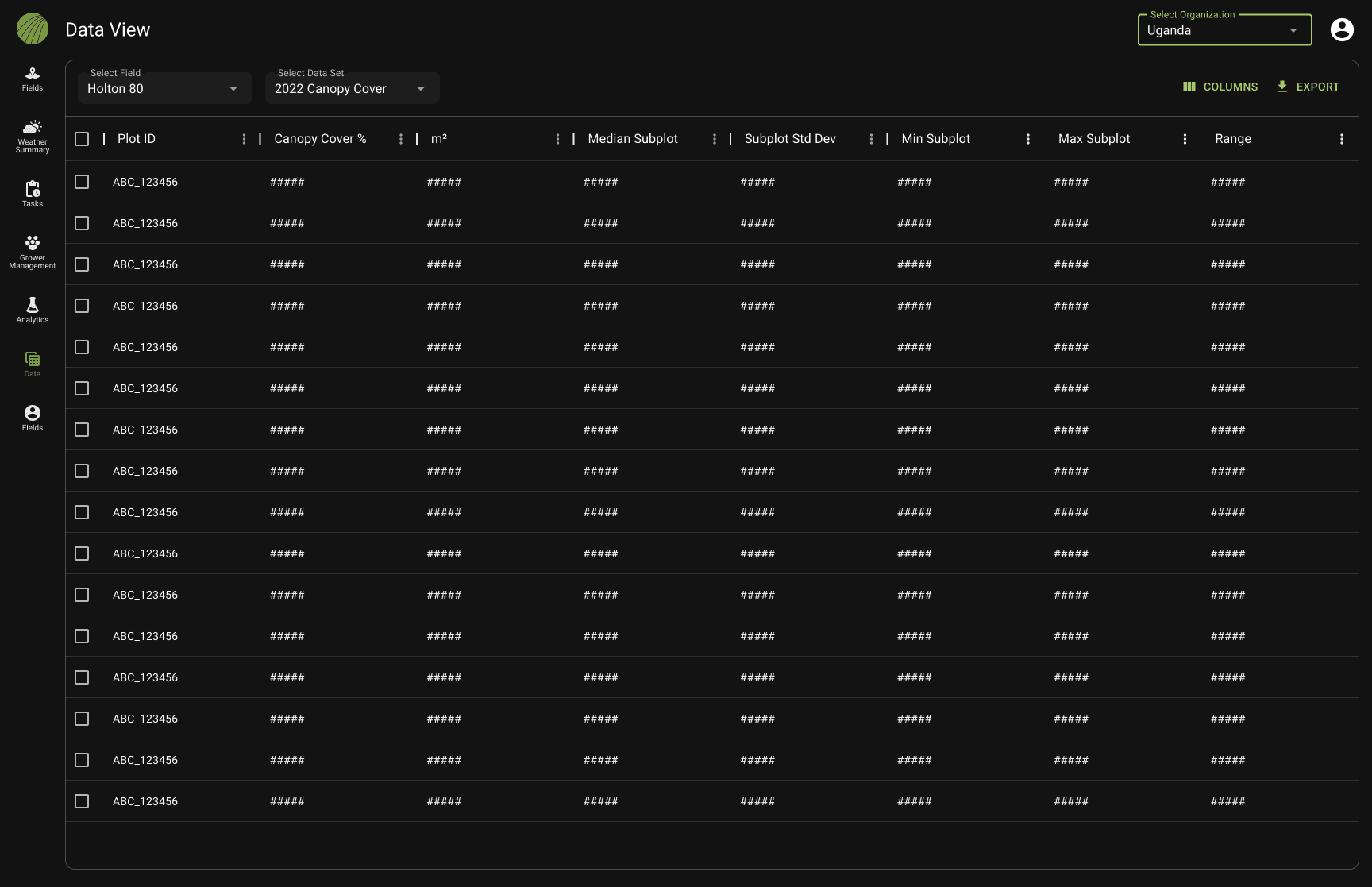
The insight gained in the research phase led to a clear next step: tabular data. The current experience was heavily reliant on map tiles, but the only way to get numerical data in tables was to request an export.
Final Prototype and Design
Our final design bridged the gap between our previous visual metaphor of projecting data points on a map and the users desire to manipulate the raw data. We built extremely flexible tables that allowed the user to filter and sort data sets and then export some or all of the data in a variety of formats.